The Lobster
Is our lobster anatomically correct?
The lobster is a decapod. They belong to the order Decapoda and share the fundamental crustacean body plan. Other than their preferred habitat and size, the lobster and the crawfish are very similar. Both have a claws, antennae, five (5) pairs of swimmerets, a cephalothorax, a segmented abdomen, and a tail fan.
Our lobster has:
Size
Our lobster is roughly six (6) meters, or eighteen (18) feet long. This is about 100 times the size of a typical lobster, which can grow up to 60 cm (24 inches) in length.
Two (2) prominent claws
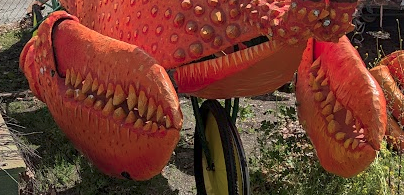
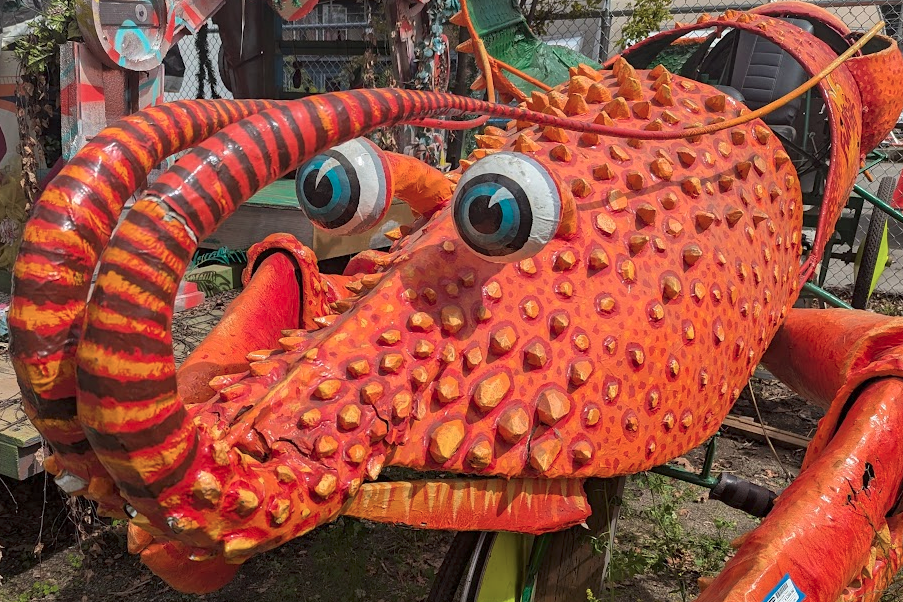
A single (1) pair of long antennae
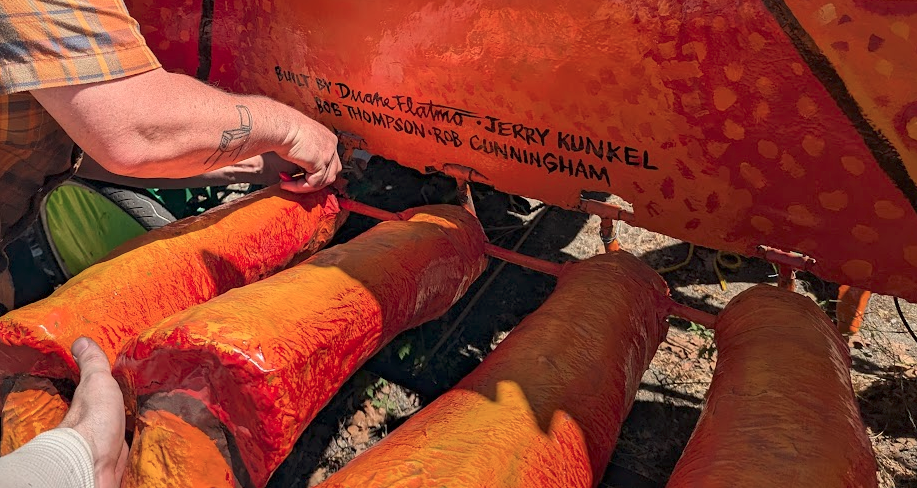
Four (4) pairs of swimmerets (the small legs on the abdomen)
A cephalothorax ( a fused head and thorax)
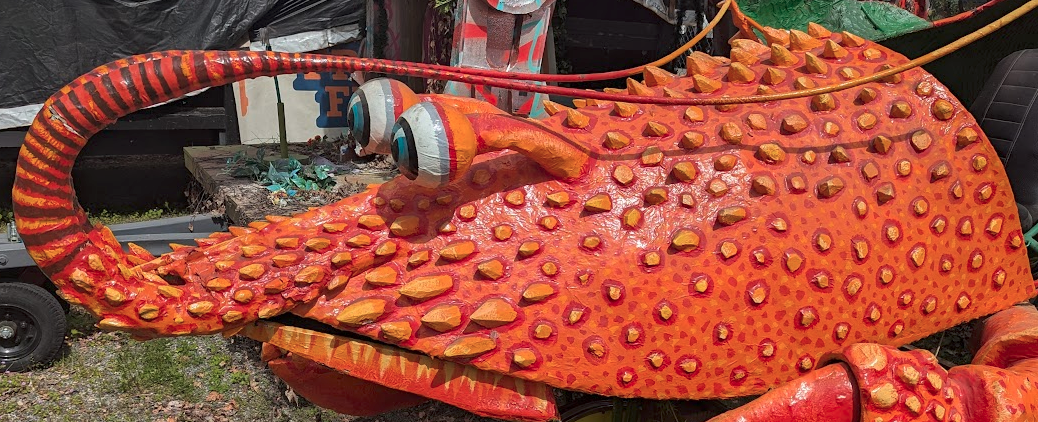
A highly segmented abdomen
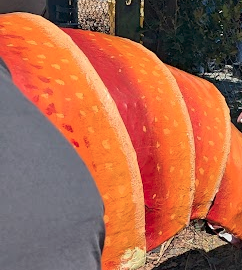
And a tail that fans out into a tail fan.

Did you spot the difference?
Our lobster is missing one pair of swimmerets. Alas, there was only so much room on the model to fit swimmerets. A choice had to be made. The original designers seem to have opted to include the four larger pairs of swimmerets, as they are more visually distinctive and "readable" at a distance. This plays a crucial role in folks identifying the lobster as, well, a lobster.
What is it made of?
We don't have a lot of documentation since the original build in 1993 (can we say "the late 1900s" yet?). The lobster also didn't come with any documentation, notes, or literature. The original builder is recently ill, and we certainly don't want to interrupt his recovery, so we are left to our own eyes and guesses here.
There is a backing visible from the inside of the lobster's shell. It reveals a large chicken wire structure backed by a green tape or fabric backing.
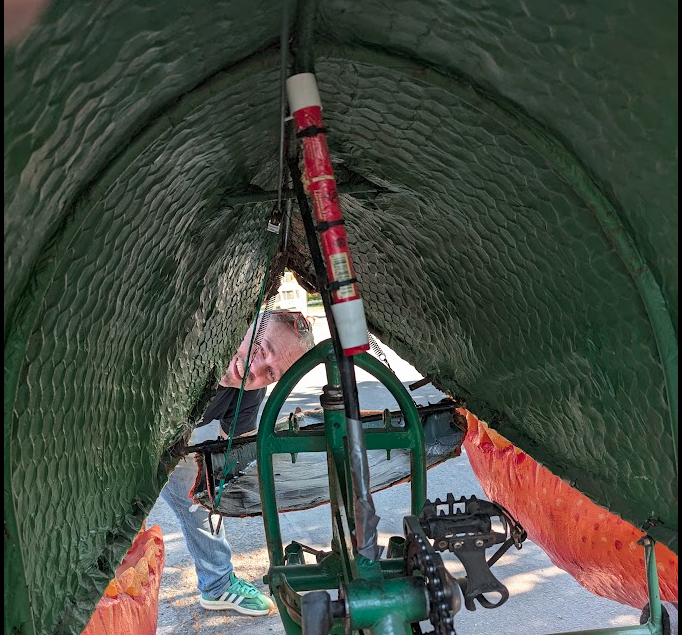
On top of that is a mix of paper, tape, glue, and paint. The repairs we made to the shell utilized a sort of fancy filler putty (like Bondo) that is infused with fiberglass fibers. This is a very strong filler that can be sanded and painted.

The paint seems like common exterior home paint, and the effect is simple but effective. For our patchwork, Mark used a combination of yellow and orange exterior spray paints that he then manipulated with a brush.

How does the movement work?
Our lobster's movement along the ground is achieved by pedaling the tricycle, but the lobster's anatomy mimics the natural movement of a lobster.
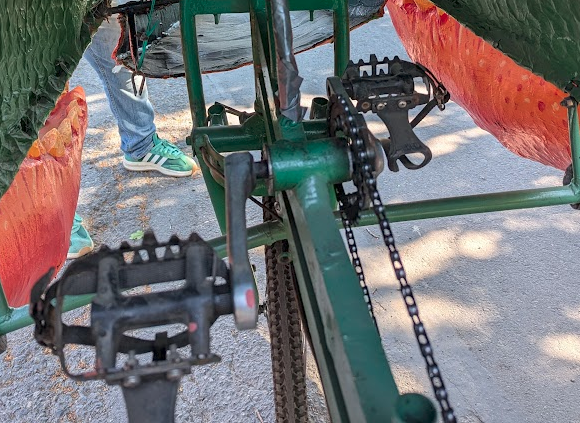
The swimmerets
The swimmerets are attached to the cephalothorax and are set upon a bicycle inner tube to create some movement.
The Claws
The claws contain cables and pulleys that travel down its arms and into the left and right side of the co-pilot's cockpit, just below the seat. These allow the co-pilot to control the opening and closing of the claws.
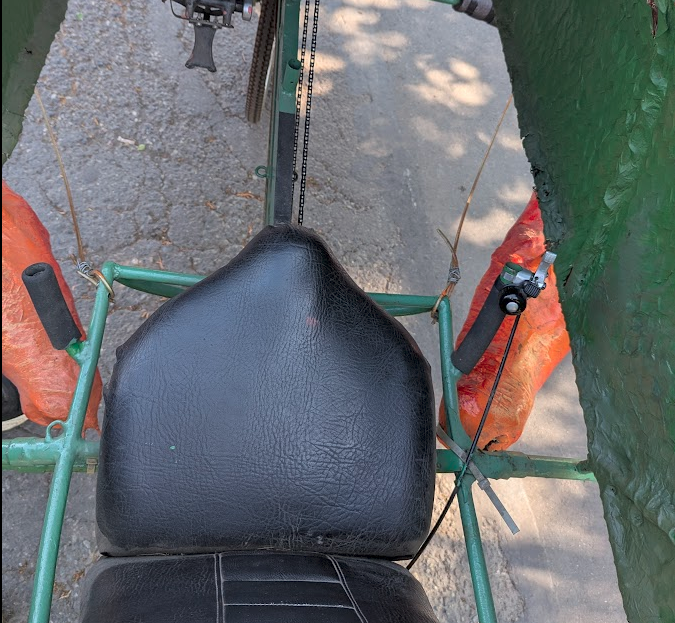
The Mouth
The mouth is controlled by a cable and pulley, traveling down the center of the cephalothorax and into the center of the co-pilot's cockpit.
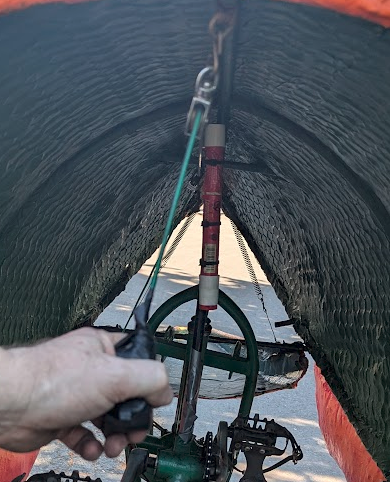
The Tail Fan
The tail fan is also controlled by a cable and pulley accessible under the left side of the pilot's seat at the back of the lobster.