The Tricycle
Beneath one shell of a lobster, there sits a custom-built tandem recumbent tricycle.
-
Tandem: It is designed to accommodate two riders, allowing them to pedal together and share the experience of riding the tricycle.
-
Recumbent: The riders sit in a reclined position, which provides comfort and support via a more relaxed riding posture.
-
Tricycle: The tricycle has three wheels, providing stability and balance for the riders.
What's it made of?
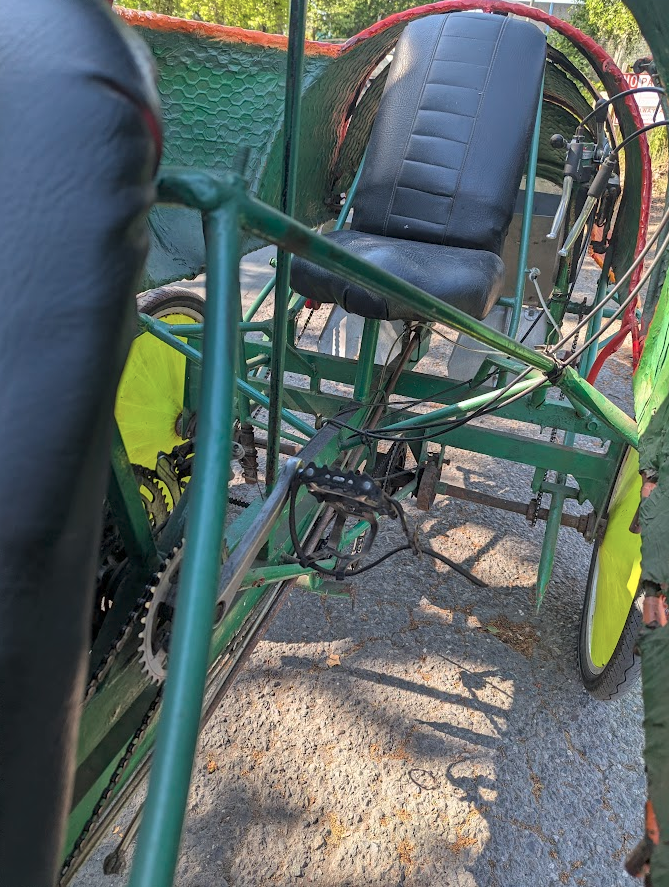
Well, mostly steel. The tricycle is constructed using a combination of square and tubular steel, and other materials to ensure durability and strength. It features comfortable reclined seating, albeit one made for a taller rider than I. The brakes and gears are all managed by traditional bicycle parts and components including standard cables and housing and a derailleur system. You can see much of these features in the following picture:
What does it do?
Well, it allows the lobster to move! The tricycle is an integral part of the lobster's mobility system, providing a means of locomotion for the creature. It is designed to be sturdy and durable, capable of withstanding the weight and movement of the lobster it supports.
Both the front and rear wheels, tires, and tubes, are standard twenty-six (26) inch bicycle components. The rear two are welded on to their axles.
Additionally, a (fairly) simple cable and pulley system connects the moveable parts of the lobster (the claws, mouth, and tail fan) to control points in the front and rear cockpits. This allows the riders to control the movement of these parts while riding the tricycle.
Is it hard to operate?
The short answer is yes. The distance between the parts that move and the rider that actuates them is quite long. This means long cables, and a lot of friction pressure on the pulleys. While the cables are coated, the moving parts are quite heavy, and it takes some effort to get them moving. It's a real trick to run the tail fan while pedaling and steering.
Is it hard to ride?
Riding
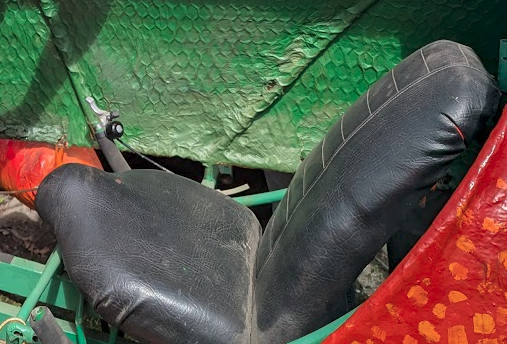
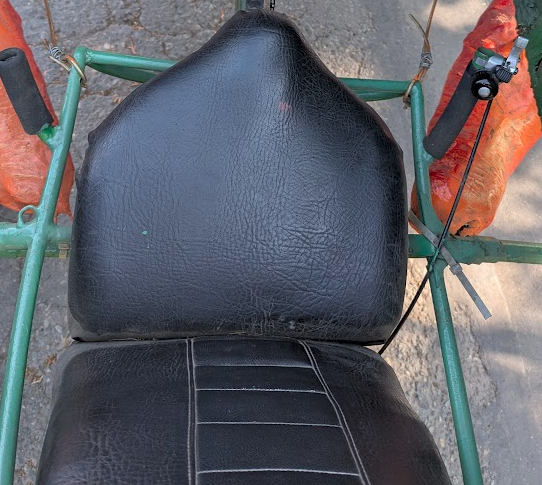
The tricycle is remarkably well engineered for riding. The original kinetic race for which it was designed was 30 miles and included mud, beach, and ocean navigation! The structure is quite balanced, but the front seat gets rattled around more than the back seat due to the weight of the claws at the front.
It is easy to get moving on flat ground, but stopping requires quite a bit of grip pressure.
Braking
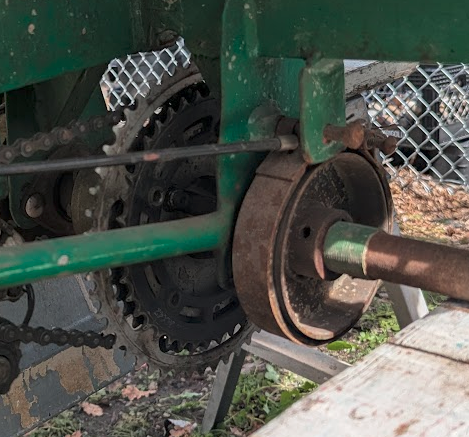
The trike has a custom(?) drum brake used to slow the tricycle down.
I wouldn't want to take it up Queen Anne Hill, and probably not down it either, but for a flat course, it's surprisingly manageable. That said, it still feels a bit like taxiing a regional jet around an airport; you must be quite aware of your clearances.
Steering
Steering is an interesting thing. A vertical grip on the right side of the rear cockpit contains a vertical grip winder that physically winds in a rope that is attached to the front wheel. This allows the rear rider to steer the tricycle by winding in the rope on one side or the other.
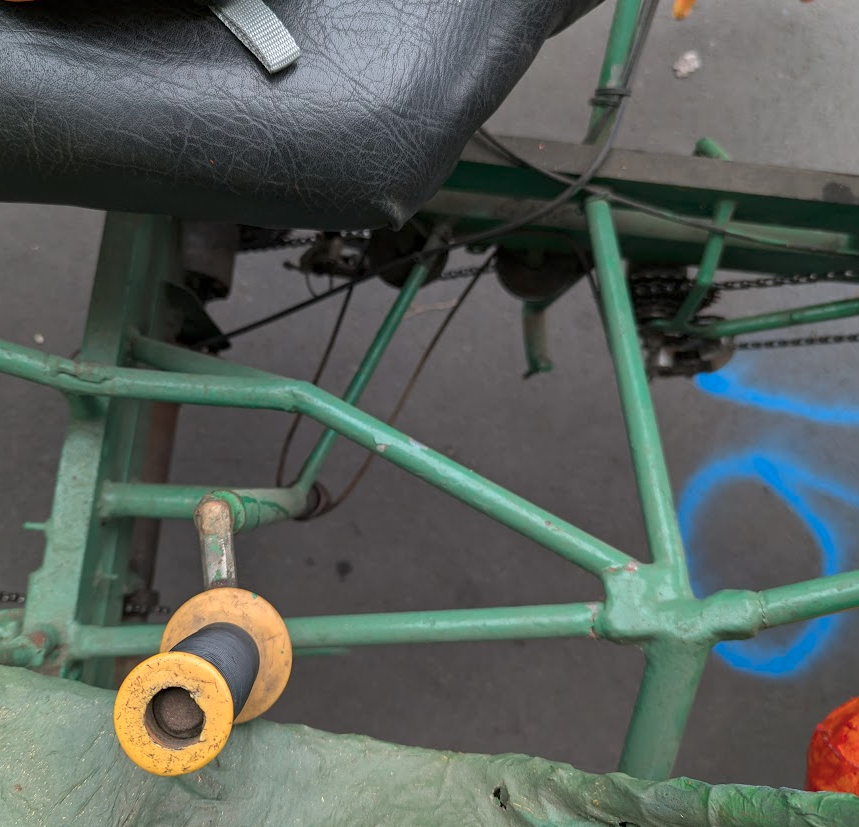
It is a bit of a slow process, and it takes some time to get used to, but it holds the tension well and is responsive. Cranked all the way to one side or the other, and trike pins around the back wheel (depending on direction). The real trick is coordinating the steering with the movement of the tricycle. The pilot in the rear seat has no view of the front seat, so there's very much a steering "by the feel of it."
Did you say ocean navigation?
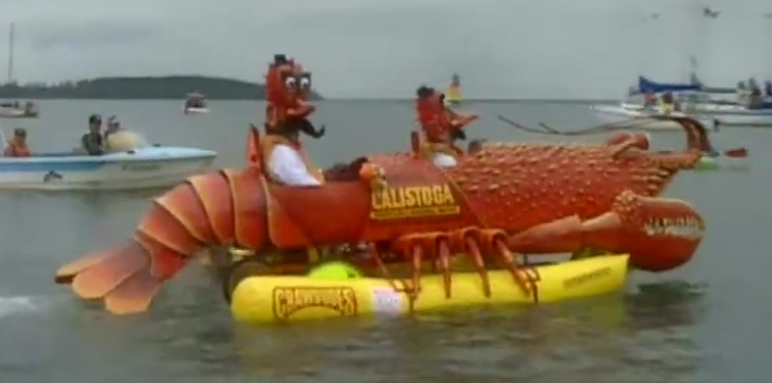
Yep, it has mounting points for a few small pontoons that run underneath, and as outriggers on the sides. It was a really cool race filled with legendary artists and builders. You can get a peak of it traversing the water in the documentary at the 1:25:00 mark.